




























Stronger "Kernel"-Feiao New BTR5 Portable Bluetooth Decoding Ear
Feiao has a relatively complete product matrix on the portable Bluetooth decoding ear, and its products also continue Feiao's consistent "stacking" style: solid materials, rich functions, and multi-purpose one machine. Recently, the "eldest brother" BTR5 in its portable Bluetooth decoding earpiece BTR series has been upgraded. The name has not changed. In what ways has the new BTR5 been upgraded?

the biggest change of the new BTR5 is to upgrade the DAC chip from the previous ES9218PC to the ES9219C. From the comparison of the specifications of the two chips, it can be seen that the ES9219C upgraded its core technology from 32-bit HyperStream II to 32-bit HyperStream III and added QUAD DAC technology. Under the condition that the signal-to-noise ratio, total harmonic distortion plus noise and sampling rate support remain unchanged, analog distortion elimination is added to harmonic compensation. It also provides support for MQA and can "expand" MQA music on mobile phones. In USB DAC mode, 16 times MQA can be unfolded with the new BTR5 and the playback software with MQA decoding function. At the same time, around the upgrade of DAC chips, Feiao has also optimized the software and hardware of the new BTR5. It can be said that the new BTR5 has better performance and rich functions.
Tips: What is MQA?
MQA(Master Quality Authenticated) is an audio coding technology developed by Bob Stuart, co-founder of British Meridian. Its purpose is to ensure the "original" of high sampling rate audio while solving the problem of excessive files. The principle is to "fold" the audio like origami into a smaller file, and it is characterized by the ability to "fold" multiple times to compress the file to a size suitable for network streaming. MQA's music files are packaged by FLAC, with a CD specification PCM file size of about 1/16, and finally achieve a playback quality of 24bit/358 kHz. To restore the MQA encoded file is to reexpand the collapsed part of it, which requires support from player software to hardware. In the absence of hardware support, the file will be decoded and played at a sampling rate of 88.2kHz or 96kHz, achieving backwards compatibility.

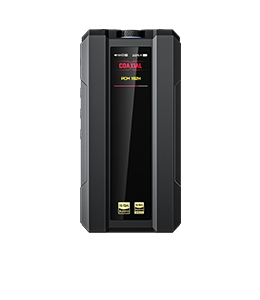
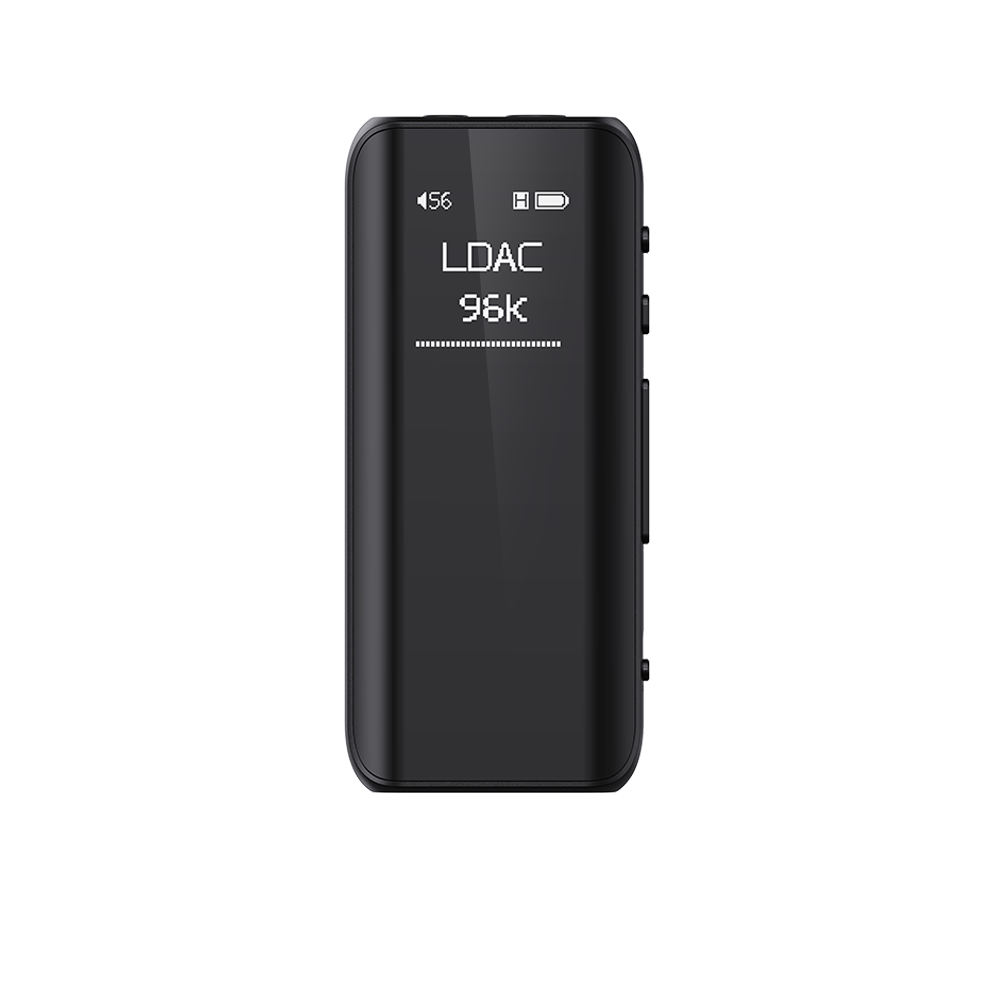
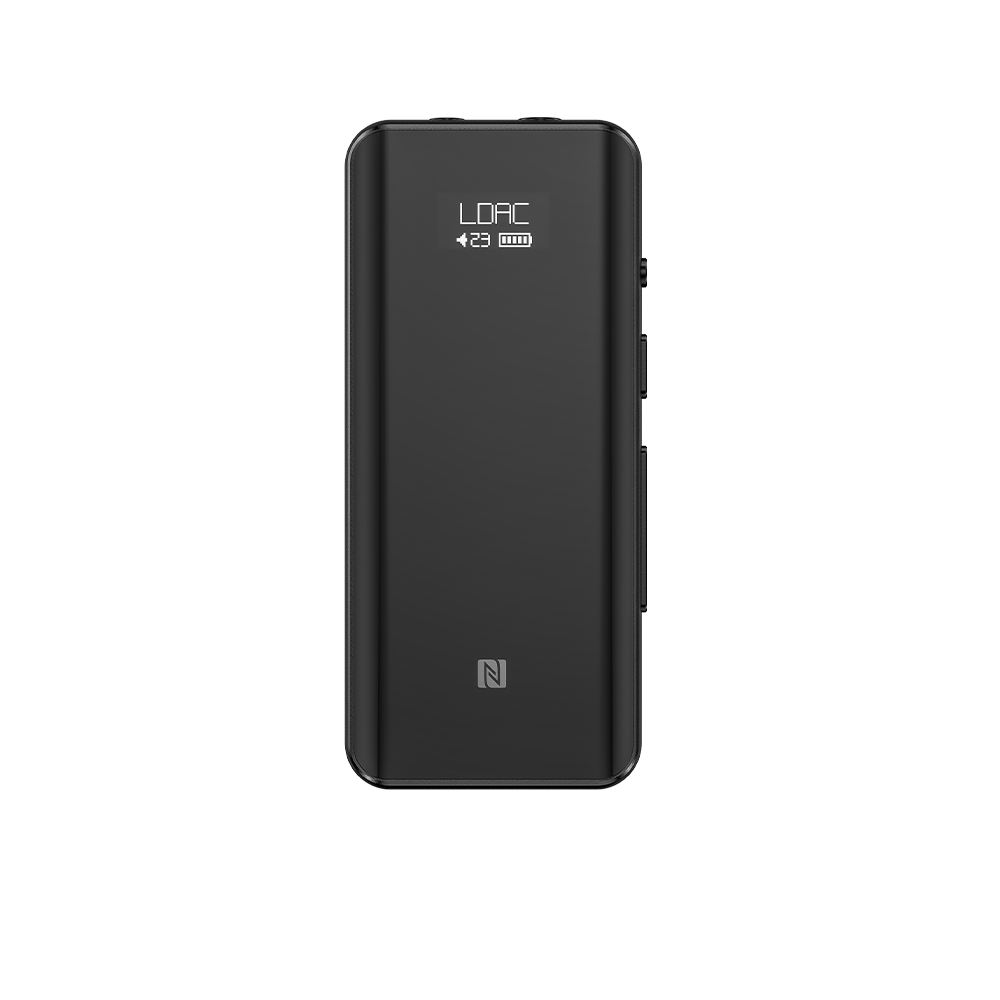
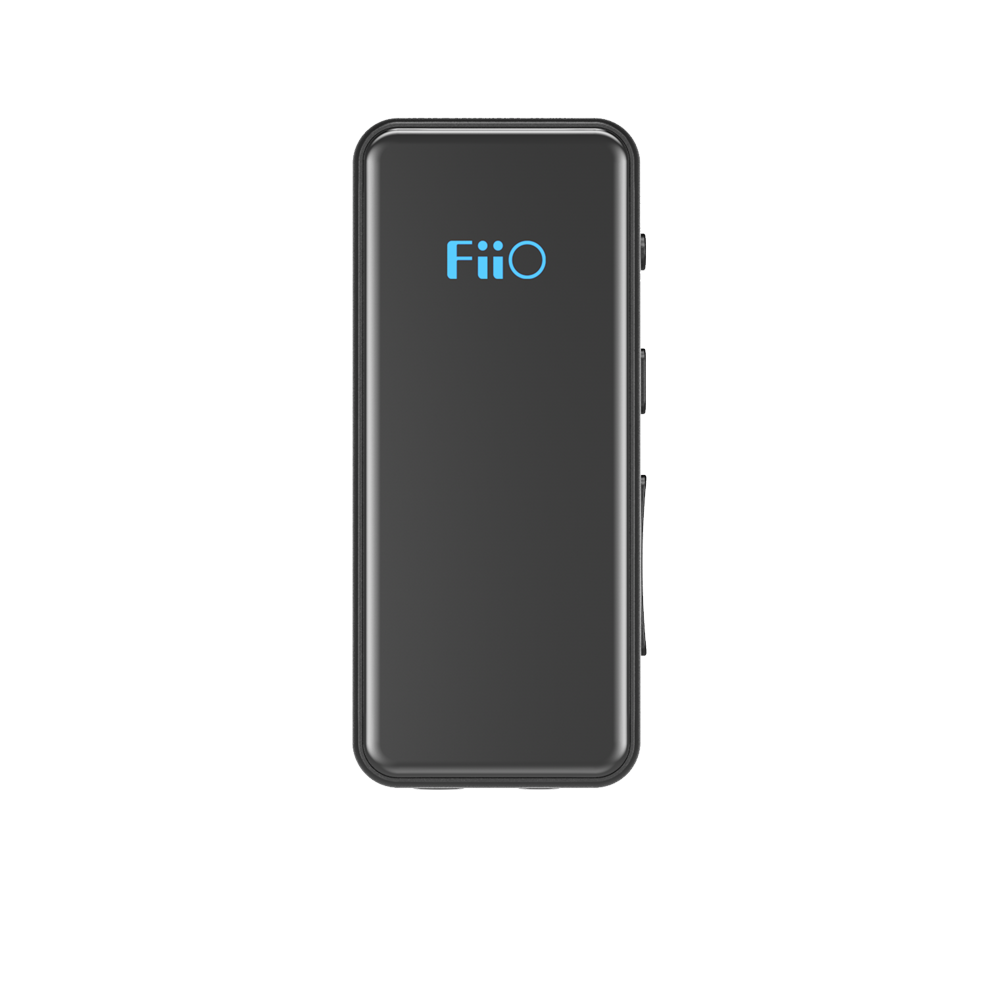
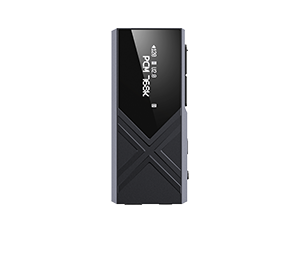
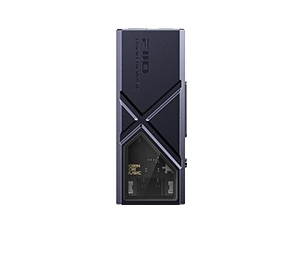
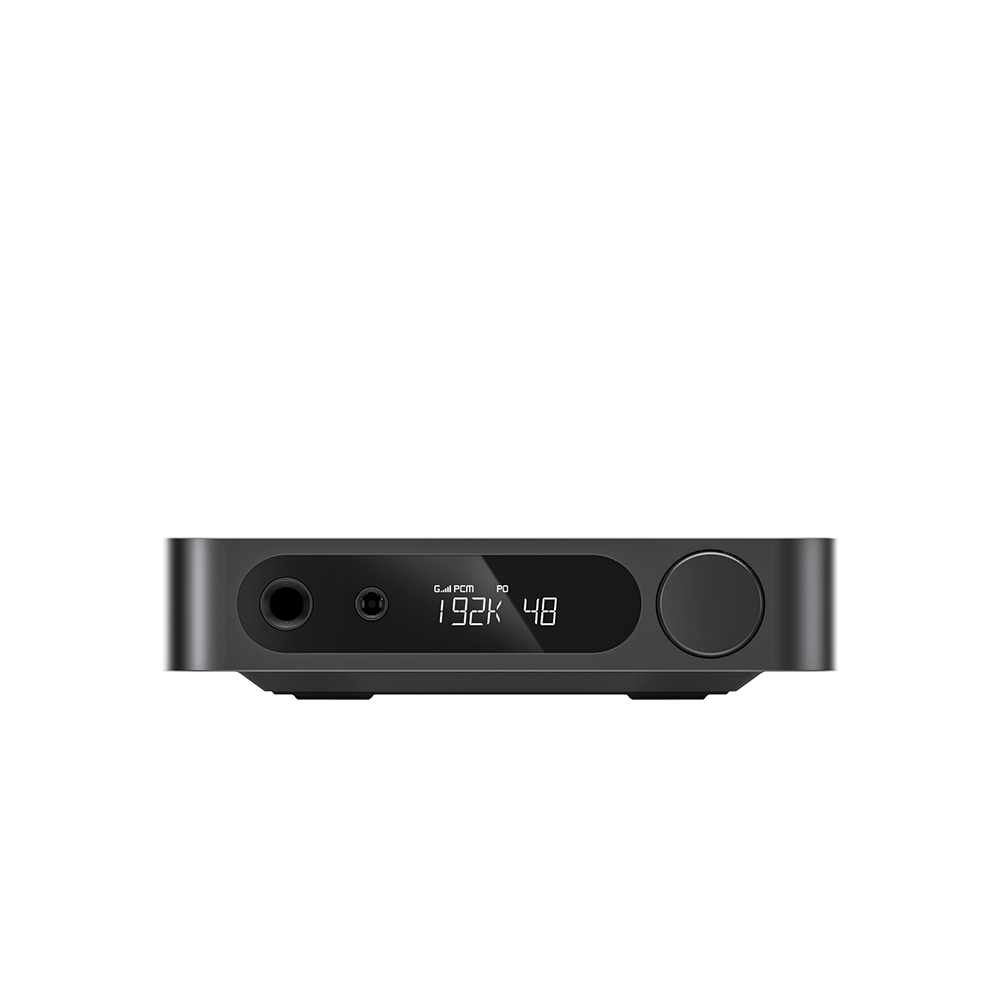
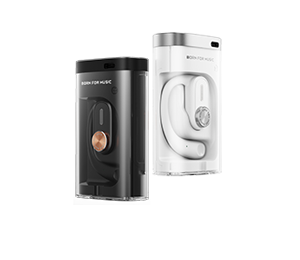
the new BTR5 has no obvious change in appearance. It is still a small long body with round corners and convenient grip and portability. Its body is made of aluminum alloy, the front and rear cover plates are hyperboloid glass, the surface is treated with oleophobic layer to prevent fingerprints, and the grip is warm and delicate.

In addition to the two Hi Res Audio small gold marks on the rear cover of the fuselage, you can also see the silk-screen MQA logo.

the accessories of the new BTR5 have added a USB-C To USB-C data cable on the basis of maintaining a detachable transparent back clip and charging cable, which is convenient for users to directly connect to Android phones or music players. The prototype we received is a standard version. In addition, the new BTR5 also has an Apple deluxe version, which comes standard with an eight-strand hand-woven copper-silver-plated Lightning To USB-C data cable to meet the needs of Apple users.


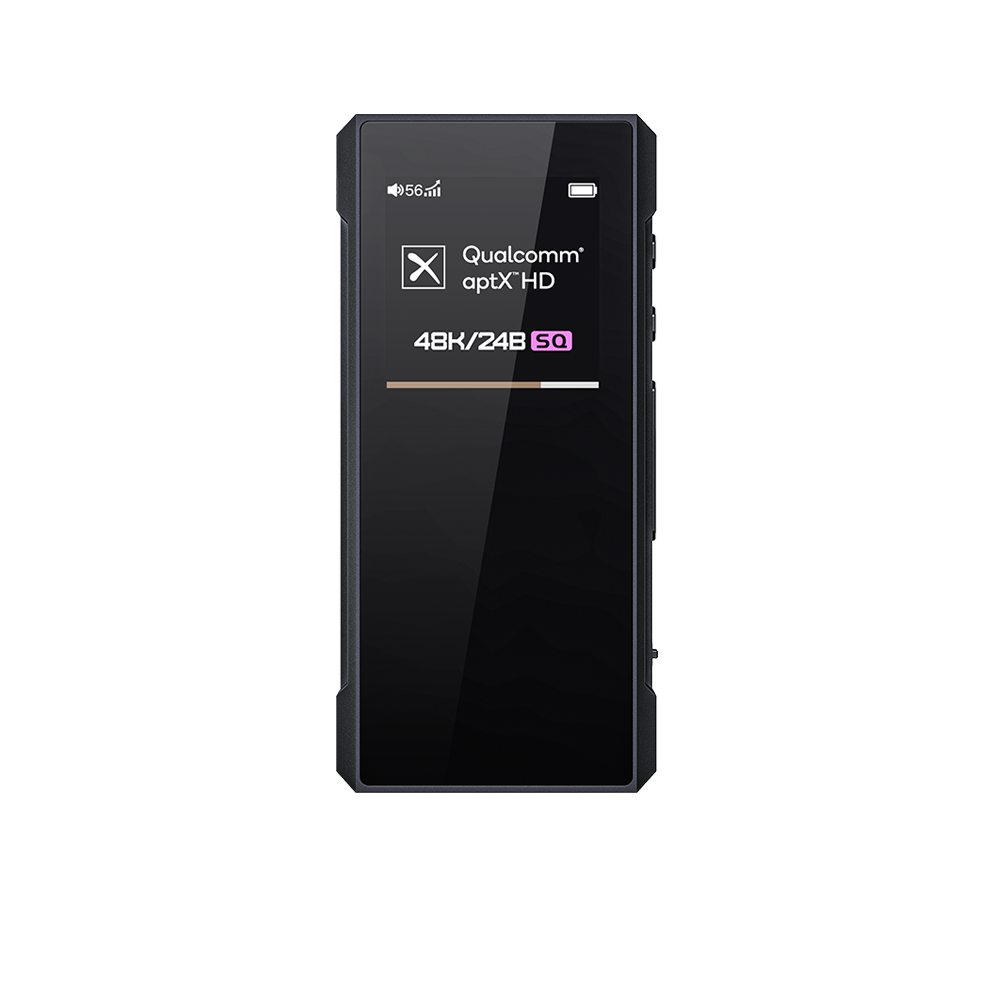
has a 0.49-inch OLED display screen with a resolution of 64 × 32 on the front of the body, which can display information such as pairing, volume, coding format, etc. Users can also call up the setting menu through the display screen to adjust USB mode, equalizer, etc. In the rest screen state, the user cannot feel the existence of the screen, and the content displayed when lit is also well integrated with the body, with a good overall perception.

the design of 3.5mm single-ended and 2.5mm balanced dual interfaces can make it suitable for more headphones. The new BTR5 has a battery capacity of 550mAh and only takes 1.5 hours to fully charge. The battery life under full power can reach up to 9 hours (3.5mm output, AAC code), which is enough to meet the high-intensity use of users.

new BTR5 is Qualcomm CSR8675. Based on Bluetooth 5.0 technology, it provides full format and high specification audio coding support, including SBC, AAC, aptX, aptX-LL and aptX-HD. The Bluetooth decoding sampling rate can reach 96kHz. Supports 24bit audio processing and 120MHz DSP, which can well integrate various lossless Bluetooth decoding operations. The configuration of dual DAC makes the new BTR5 have full potential, with a power of 240mW @ 32 Ω under balanced output. In the USB decoding part, it uses an independent control chip Xmos XUF208, which can support 384k sampling rate and DSD hardware solution when used as USB DAC through USB-C interface.

The new BTR5 has many application scenarios and is highly playable: it is connected to the mobile phone as a "small tail" to realize MQA function and enjoy mastering-level sound restoration; Connect the mobile phone wirelessly through Bluetooth, and the wired earphone is connected to its 3.5mm interface or 2.5mm interface to improve the sound quality performance of the mobile phone. Connect to PC through USB interface to realize high sampling rate and DSD hard solution; Connect with the car, let the car also play lossless music on the mobile phone; It can also be connected to a wired speaker to turn it into a wireless speaker. It can also connect TV sets and game consoles such as Switch and PS5 to improve the sound performance of these devices.
I used the USB-C To USB-C data cable in the attachment to connect the new BTR5 as a "small tail" to the mobile phone. It will automatically detect the USB connection and pop up the menu. The default is that the charging function is turned off. At this time, the charging function can be turned off by pressing any key and switching to the "small tail" mode with one key without consuming the power of the mobile phone. Using 2.5mm interface to connect with FD5 for audition, the new BTR5 maintains the advantages of clean and transparent front sound bottom, good resolution under the balance port, and many sound details are well presented. Compared with the previous work, the sound style of the new BTR5 feels more positive. Its low-frequency sense of quantity is relatively sufficient and its texture is good, but its control force for larger dynamics is relatively general. The human voice knot in the intermediate frequency part is more obvious, and the sound density is good, but the dental sounds of some female voices are easier to capture. The high-frequency part stretches naturally, with rich details and not too hard. I also use my mobile phone to connect with the new BTR5 wirelessly via Bluetooth. It automatically works under LDAC, and the sound quality performance is still maintained at a good level.


I also tried the new BTR5 to support MQA. Connect it to a Windows PC through a USB interface and play MQA music files with TIDAL. At this time, the word MQA is displayed on the screen of the new BTR5. Since the new BTR5 supports MQA Renderer, the "Passthrough MQA" option needs to be turned off in TIDAL settings. If the device in the user's hand supports MQA Full Decoder, this option can be turned on.

is the master of Feiao portable Bluetooth decoding earpiece. The new BTR5 maintains this feature and further improves the performance and enriches the functions by changing the core. Its price is 50 yuan more expensive than the old model. Considering its upgrade, I believe it will not affect consumers' purchase. For users who want to easily improve the sound quality of mobile phones, PC and other devices, the new BTR5 will be a good choice.
Basic parameters
Bluetooth Version: Bluetooth 5.0
audio DAC:ES9219C × 2
MQA Renderer: supported
Bluetooth Chip: CSR8675
USB decoding chip: Xmos XUF208
Ear power: single-ended 80mW(32 Ω load) and balanced 240mW(32 Ω load)
The highest sampling rate is supported: UAC 384k/DSD256
Duration: 9 hours per terminal and 7 hours per terminal.
plug type: 3.5mm single-ended 2.5mm balance
: mobile phone decoding (small tail mode), car mode
supports Bluetooth encoding formats: SBC, AAC, aptX, aptX-LL, aptX-HD, LDAC
volume adjustment: and mobile phone volume can be adjusted separately
size: 72mm × 32mm × 11.1mm (excluding back clip)
weight: about 43.7g
reference price: 749 yuan
Advantages: The upgraded DAC chip has better performance, supports MQA, has rich functions, and provides single-ended and balanced dual interfaces.
Disadvantages: Glass mirror body is easy to be stained with fingerprints.
author: Microcomputer Official Microblog10-06 16:22
website: https://weibo.com/ttarticle/p/show?id=2309404689336980603074
